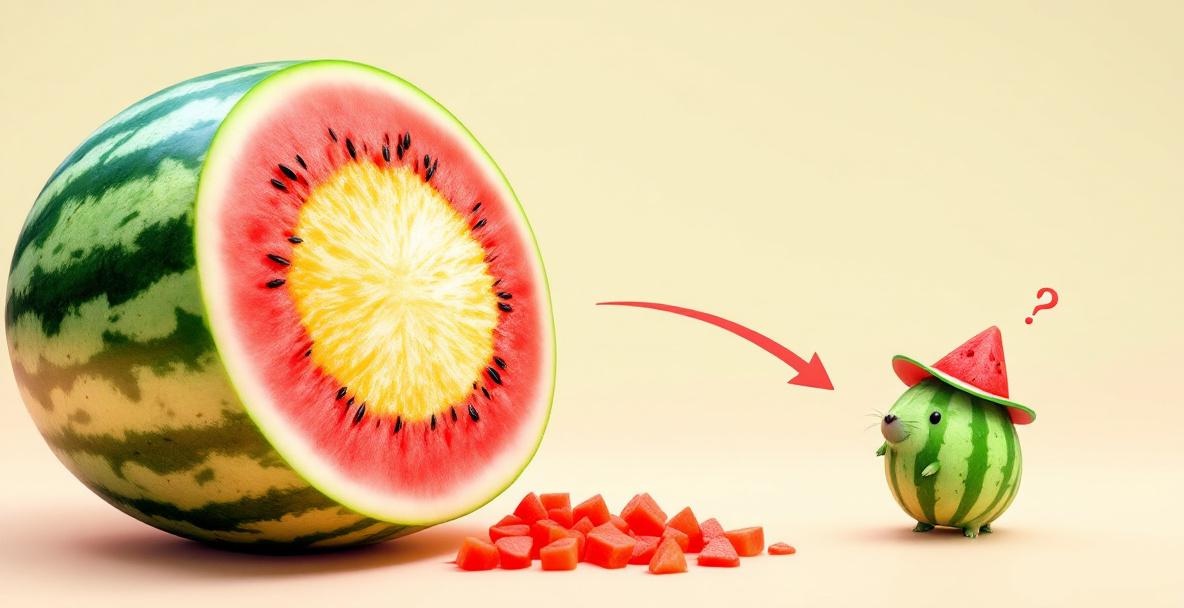
What Is the Watermelon Field Spot?
The field spot is the area where a watermelon rests on the ground as it grows. This patch doesn't receive direct sunlight, so it remains lighter than the rest of the rind. As the watermelon ripens, natural sugars concentrate and the field spot gradually changes from white to cream to deep yellow. The field spot color directly correlates with sugar content — specifically, the concentration of sucrose that develops in the final 7-10 days of ripening. A 2018 study by the University of Georgia found that watermelons with creamy yellow field spots averaged 11.2% sugar content, compared to just 8.4% for those with white spots. In practice, this means you can predict sweetness just by looking at the bottom of the melon.How to Read the Field Spot Colors
Creamy yellow to orange: Perfect ripeness. This watermelon sat on the vine long enough to develop full sweetness. The deeper the yellow, the riper the fruit. Pale yellow: Good ripeness. This melon will be sweet, though not quite at peak flavor. White or very pale green: Underripe. The watermelon was harvested too early and will taste bland or even slightly bitter.Quick Field Spot Test
Look for a field spot that's cream-colored or darker yellow, roughly the size of your palm. If you can't find a clear field spot, or if it's smaller than a quarter, the watermelon was likely picked before it had time to develop one properly.Why Most People Pick Wrong Watermelons
Walk through any grocery store and you'll see people thumping melons like they're checking tire pressure. The truth? Sound is one of the least reliable ripeness indicators for watermelons. Most shoppers focus on size, symmetry, or that hollow thump sound. But these methods miss the most important factor: whether the watermelon actually finished ripening on the vine.
Want to take the guesswork out of watermelon selection? The Juicy Melons app uses your phone camera to instantly analyze field spot color and predict sweetness. Download it free and never pick a disappointing watermelon again — Melvin the capybara tested it himself! 📱🍉
The field spot method works because it's based on plant biology, not guesswork. When a watermelon is ready for harvest, it naturally develops what farmers call "slip" — the stem detaches easily from the vine. This happens at the exact same time the field spot reaches its characteristic creamy yellow color.